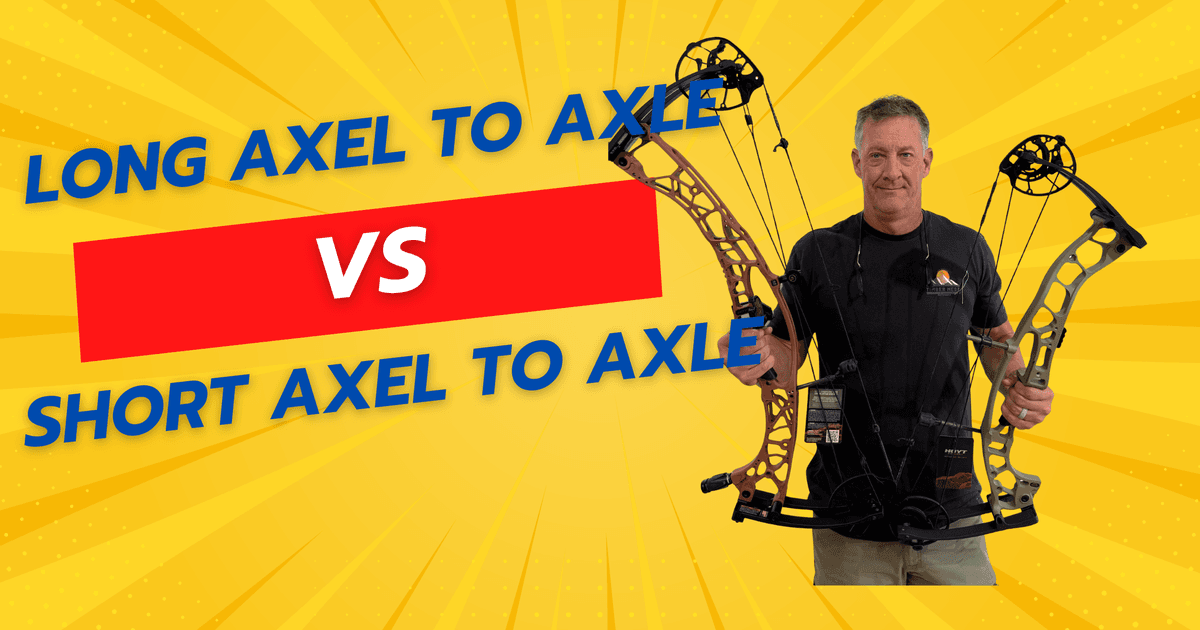
When it comes to archery, one of the most crucial factors influencing a bow’s performance and feel is its axle-to-axle (ATA) length. This measurement pertains to the distance between the axles of the bow's cams, and it plays a significant role in determining the bow's overall characteristics. In this blog, we’ll delve into the fundamental differences between long and short axle-to-axle bows, discussing how each length impacts performance, handling, and shooting experience.
The Basics: What is Axle-to-Axle Length?
The axle-to-axle length of a bow is defined as the distance from one cam axle to the other. This measurement can significantly influence a bow's stability, maneuverability, and speed. As a general rule, longer axle-to-axle bows tend to be more forgiving, while shorter bows are faster but may require a higher level of skill to shoot accurately.
Long Axle-to-Axle Bows: Stability and Forgiveness
Advantages
- Increased Stability: Longer bows provide a larger platform, which can enhance stability during the shot. This additional stability is particularly beneficial for beginners or those who may struggle with consistent shooting technique.
- Forgiving Nature: With more stability comes a greater level of forgiveness. A longer ATA bow allows for a larger margin of error during the shot process. If your anchor point or grip isn’t perfect, a longer bow is less likely to throw your shot off course compared to a shorter one.
- Reduced Vibration: Longer bows often absorb shock better, leading to less vibration upon release. This can improve the overall shooting experience and enhance accuracy, as the vibrations can disrupt your aim.
Disadvantages
- Slower Speed: The trade-off for increased stability is often reduced speed. Longer bows typically have a slower IBO (International Bowhunting Organization) speed rating, which means they may not deliver arrows quite as fast as their shorter counterparts.
- Limited Maneuverability: While longer bows are stable, they can also be less maneuverable in tight spaces. This can be a disadvantage for tree stand hunters or those navigating through dense brush.
Short Axle-to-Axle Bows: Speed and Precision
Advantages
- When it comes to archery, one of the most crucial factors influencing a bow’s performance and feel is its axle-to-axle (ATA) length. This measurement pertains to the distance between the axles of the bow's cams, and it plays a significant role in determining the bow's overall characteristics. In this blog, we’ll delve into the fundamental differences between long and short axle-to-axle bows, discussing how each length impacts performance, handling, and shooting experience.
The Basics: What is Axle-to-Axle Length?
The axle-to-axle length of a bow is defined as the distance from one cam axle to the other. This measurement can significantly influence a bow's stability, maneuverability, and speed. As a general rule, longer axle-to-axle bows tend to be more forgiving, while shorter bows are faster but may require a higher level of skill to shoot accurately.
Long Axle-to-Axle Bows: Stability and Forgiveness
Advantages
- Increased Stability: Longer bows provide a larger platform, which can enhance stability during the shot. This additional stability is particularly beneficial for beginners or those who may struggle with consistent shooting technique.
- Forgiving Nature: With more stability comes a greater level of forgiveness. A longer ATA bow allows for a larger margin of error during the shot process. If your anchor point or grip isn’t perfect, a longer bow is less likely to throw your shot off course compared to a shorter one.
- Reduced Vibration: Longer bows often absorb shock better, leading to less vibration upon release. This can improve the overall shooting experience and enhance accuracy, as the vibrations can disrupt your aim.
Disadvantages
- Slower Speed: The trade-off for increased stability is often reduced speed. Longer bows typically have a slower IBO (International Bowhunting Organization) speed rating, which means they may not deliver arrows quite as fast as their shorter counterparts.
- Limited Maneuverability: While longer bows are stable, they can also be less maneuverable in tight spaces. This can be a disadvantage for tree stand hunters or those navigating through dense brush.
Short Axle-to-Axle Bows: Speed and Precision
Advantages
- Compact and Lightweight: Shorter bows are more compact and often lighter, making them easier to carry in the field. Their reduced length allows for quick movements and adjustments, which can be a significant advantage in dynamic hunting scenarios.
- Faster Arrow Speeds: A short axle-to-axle bow generally allows for faster arrow speeds, making it a great option for those looking to maximize their velocity. This can be beneficial for long-range shots or when hunting larger game that requires additional kinetic energy.
- Easier to Handle in Tight Spaces: The compact design of shorter bows makes them easier to maneuver in confined areas, such as small ground blinds or thick forests.
Disadvantages
- Less Forgiving: The primary drawback of a shorter bow is its unforgiving nature. Just a slight inconsistency in form or technique can result in significant impacts on accuracy. This makes shorter bows more suitable for experienced archers who have mastered their shooting form.
- More Vibration: Shorter bows may transmit more vibration to the shooter upon release, which can be distracting and potentially affect accuracy over time.
Conclusion: Choosing the Right Bow for You
When deciding between a long and short axle-to-axle bow, it’s essential to consider your individual needs, preferences, and skill level. If you’re a beginner looking for stability and forgiveness, a longer ATA bow may be the better choice. On the other hand, if you are an experienced archer in search of speed and maneuverability, a shorter axle-to-axle bow could be the ideal fit.
Ultimately, the best bow is the one that feels right in your hands and matches your shooting style. By understanding the nuances of axle-to-axle length, you can make an informed decision and enhance your archery experience
- Faster Arrow Speeds: A short axle-to-axle bow generally allows for faster arrow speeds, making it a great option for those looking to maximize their velocity. This can be beneficial for long-range shots or when hunting larger game that requires additional kinetic energy.
- Easier to Handle in Tight Spaces: The compact design of shorter bows makes them easier to maneuver in confined areas, such as small ground blinds or thick forests.
Disadvantages
- Less Forgiving: The primary drawback of a shorter bow is its unforgiving nature. Just a slight inconsistency in form or technique can result in significant impacts on accuracy. This makes shorter bows more suitable for experienced archers who have mastered their shooting form.
- More Vibration: Shorter bows may transmit more vibration to the shooter upon release, which can be distracting and potentially affect accuracy over time.
Conclusion: Choosing the Right Bow for You
When deciding between a long and short axle-to-axle bow, it’s essential to consider your individual needs, preferences, and skill level. If you’re a beginner looking for stability and forgiveness, a longer ATA bow may be the better choice. On the other hand, if you are an experienced archer in search of speed and maneuverability, a shorter axle-to-axle bow could be the ideal fit.
Ultimately, the best bow is the one that feels right in your hands and matches your shooting style. By understanding the nuances of axle-to-axle length, you can make an informed decision and enhance your archery experience